
Elizabeth Taylor's Five Rules for Wearing Statement Jewelry
The big ring you never wear, the grandmother's brooch, the pearls in the drawer — five rules from the woman who wore a 33-carat diamond in the bath.
There is a drawer in your house with a good piece in it. A big ring, a grandmother's brooch, earrings that seemed like an excellent idea at the time. You take it out, hold it up, say "not today", and put it back. The occasion has failed to arrive for about seven years now.
Elizabeth Taylor wore a thirty-three-carat diamond in the bath.
Richard Burton bought it in 1968 and she put it on and left it there. Not for premieres — to breakfast, on aeroplanes, in the bath, doing the washing up. A journalist who came out to Bel-Air in 2004 found her at sundown in a gauzy white caftan with violet trim, red lipstick, thirty-three carats on her hand, on an ordinary evening, for nobody.
That is the whole method. Everything below is just the detail of it.
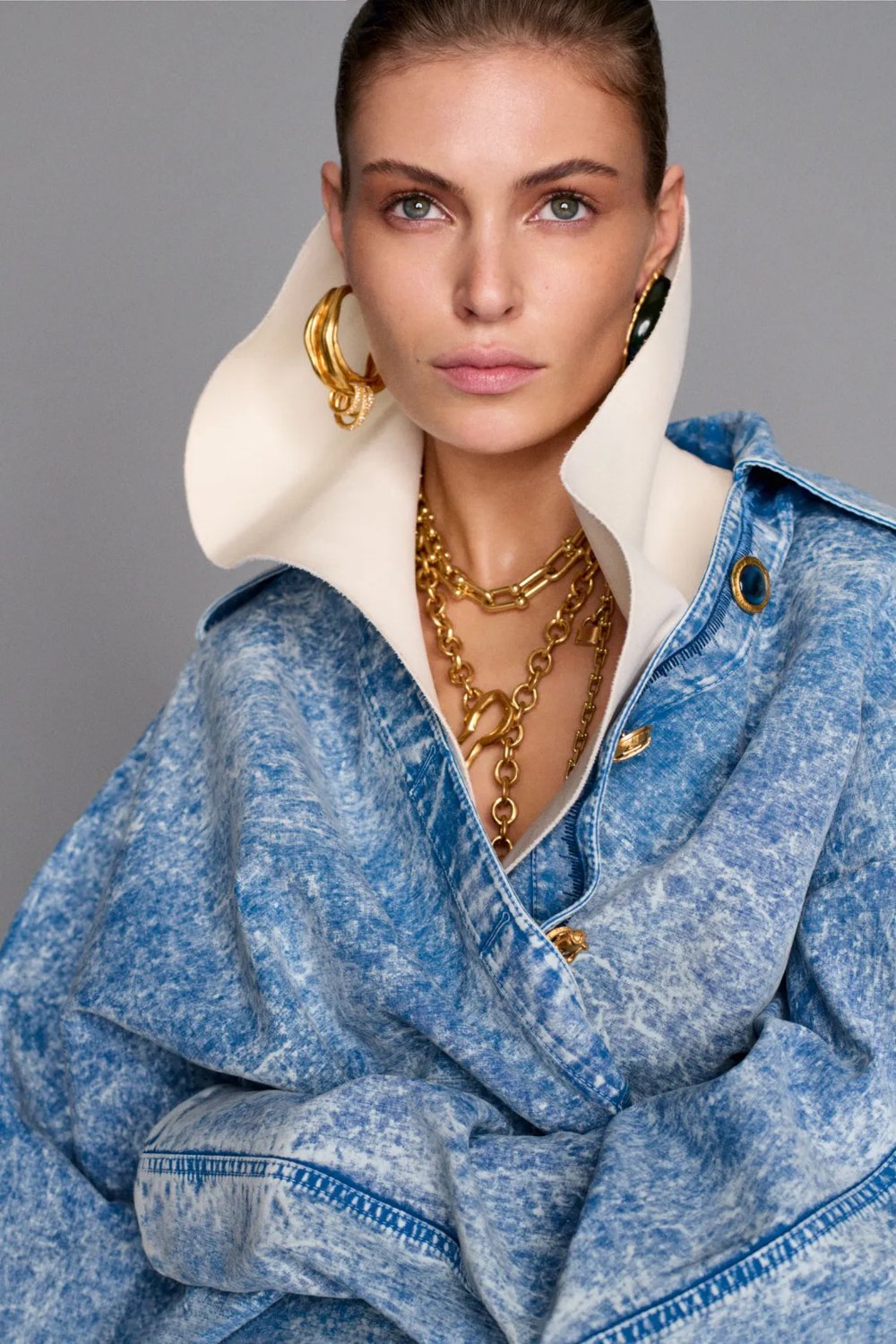

One. The jewel is the outfit
One serious piece, and clothes calm enough to be its velvet box. Never three things arguing across your body at the same time.
This is the rule most people break while thinking they are being generous with themselves. Big earrings plus a statement necklace plus a fistful of rings does not read as "more" — it reads as a rummage. Pick the loudest piece and quiet everything else down to nothing: one texture, one colour, hair off the face if the piece lives near it.
The practical version: decide what the outfit is about before you leave the bedroom. If it is about the cuff, the top is a plain crew neck. If it is about the earrings, the neck stays empty.
Two. Vintage is for the young
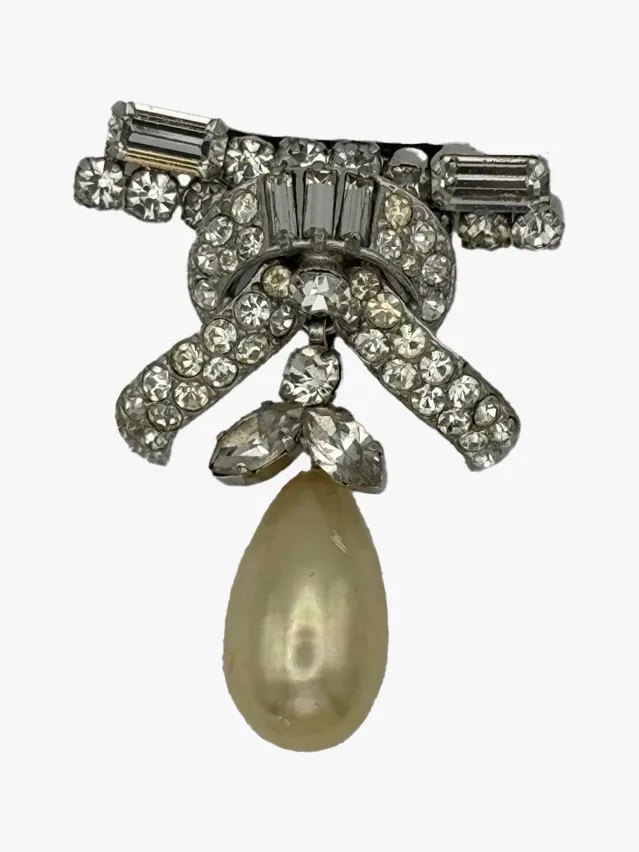
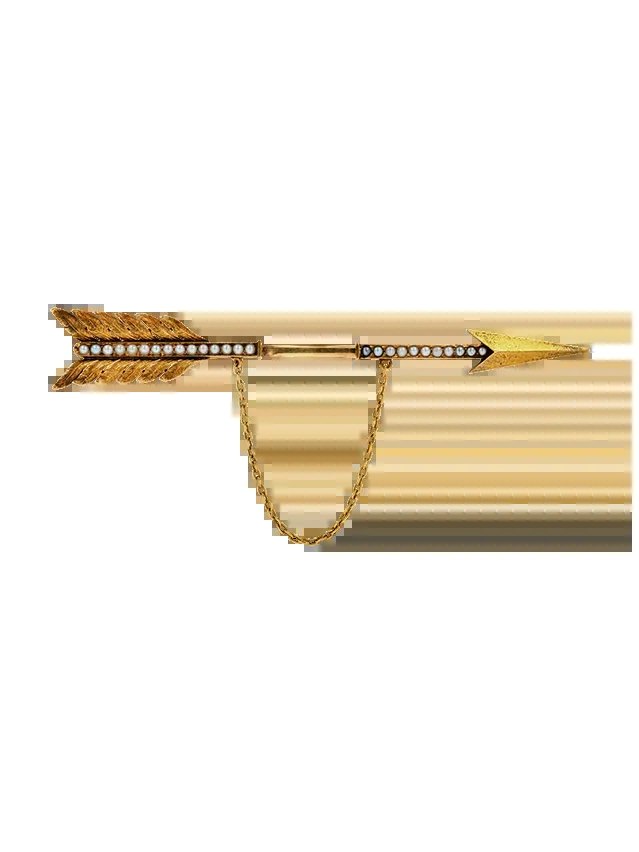
A stone with a past beats a stone with a receipt. Vintage on a young face is the whole trick — something with a century of wear on it does what a new piece cannot — the cut is slightly off by modern standards, the setting is heavier, the gold has gone soft in colour, and all of that reads as history instead of purchase.
You do not need a Cartier provenance for it. Borrow it, inherit it, hunt it down at auction: estate sales, a lot nobody bid on, the brooch in your mother's drawer, a 1970s cocktail ring off a market stall. Taylor never really wore a jewel that could not tell a story.
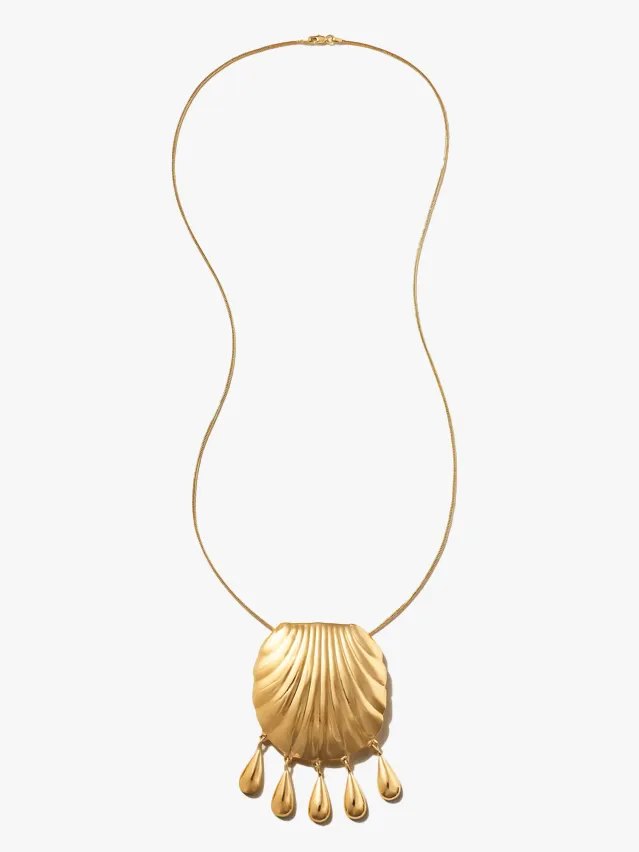
And if you inherited something you never wear because it feels too old — that is usually a setting problem, not a stone problem. She had things rebuilt constantly. The famous pear-shaped diamond was too big to live on a hand, so Cartier turned the ring into a pendant and she wore it that way instead. The stone is the heirloom. The mount is an opinion, and opinions can be changed.
Three. Pearls over a shirt
A fact worth having. La Peregrina — the pearl that belonged to the Spanish crown for three centuries, that Velázquez painted, that Philip IV wore in his hat — was bought by Burton in 1969 for $37,000. Taylor lost it exactly once, in a hotel suite. "I just casually opened the puppy's mouth," she wrote, "and inside his mouth was the most perfect pearl in the world."
The queen's pearl went over ordinary cotton. That is the move to steal.
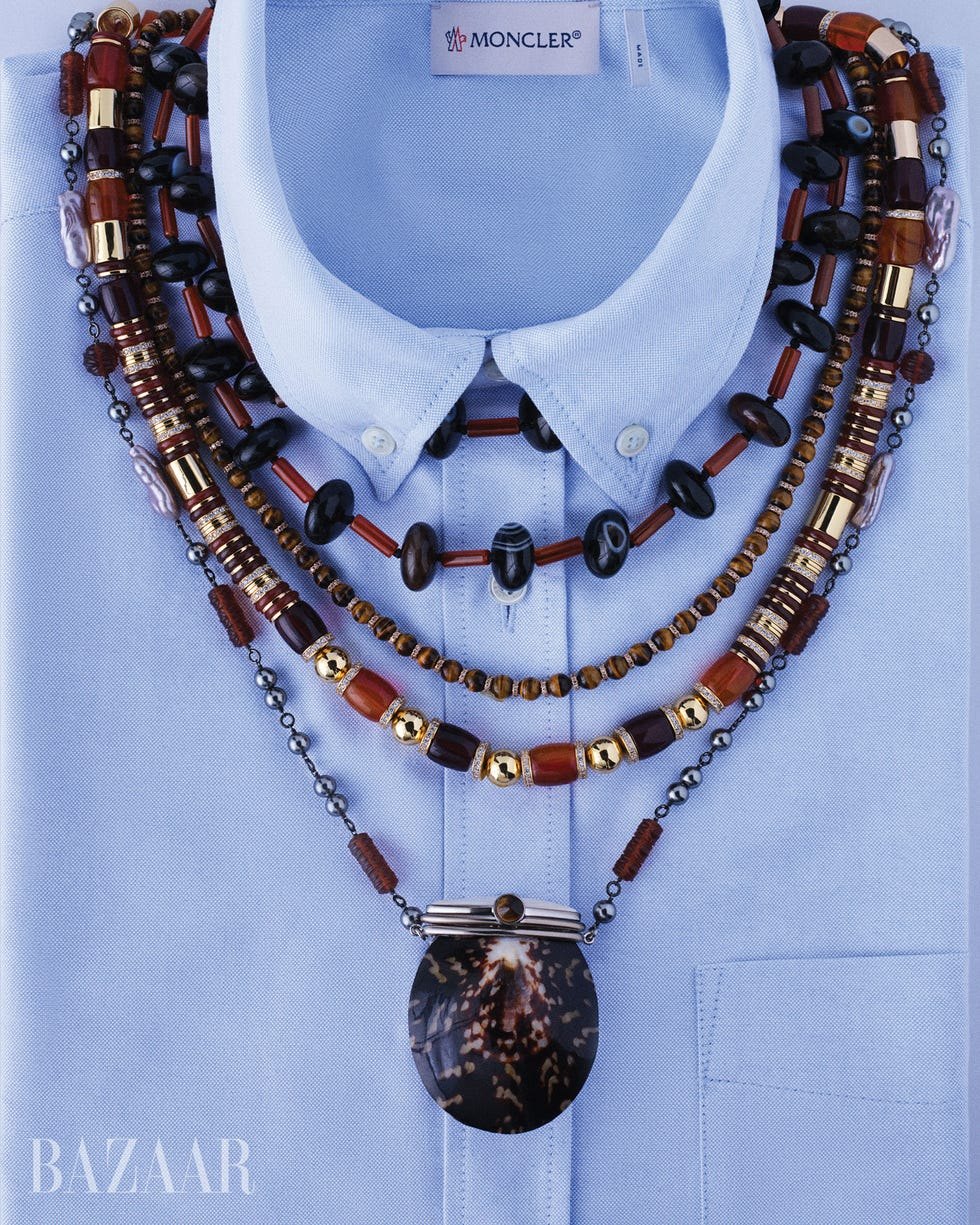
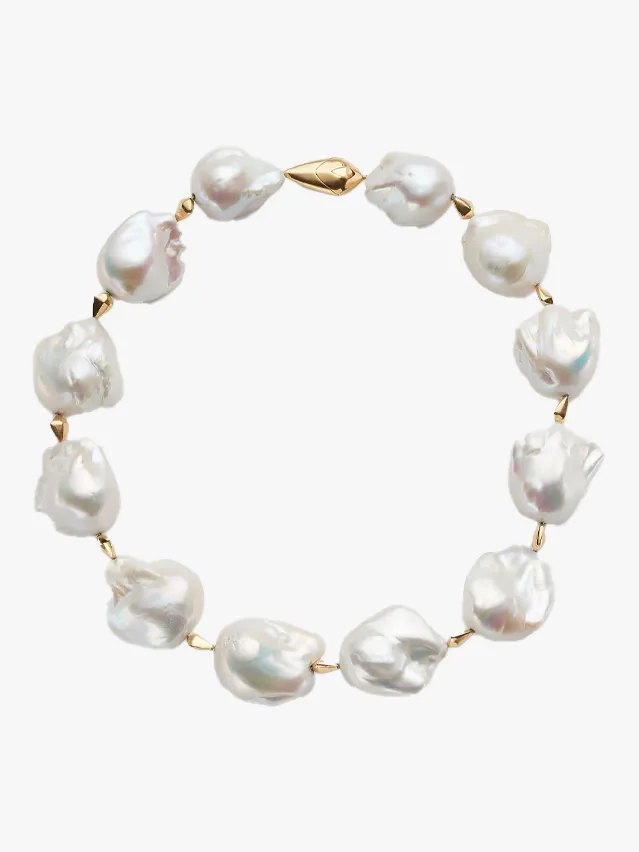
Pearls read stiff and matronly only when they are worn the way a dress code once demanded: matched set, buttoned blouse, best behaviour. Put a single long strand over a white cotton shirt, or one heavy baroque pearl over a grey sweatshirt, and the whole thing turns modern on the spot.
The general form: if a piece looks too grand for daytime, that is exactly when to wear it. Diamonds at breakfast, not diamonds at midnight and never otherwise.
Four. Scale without apology
One enormous thing, worn as if it were obvious.
The second you start explaining it — "it's vintage", "it was my mother's", "I know it's a lot" — the piece stops working, because you have just asked the room to assess it. Nothing shrinks jewellery faster than an apology attached to it. Taylor knew exactly how the Krupp read and never once softened it: "With this one I broke the sound barrier." She called it vulgar herself, and was proud of every inch of it.
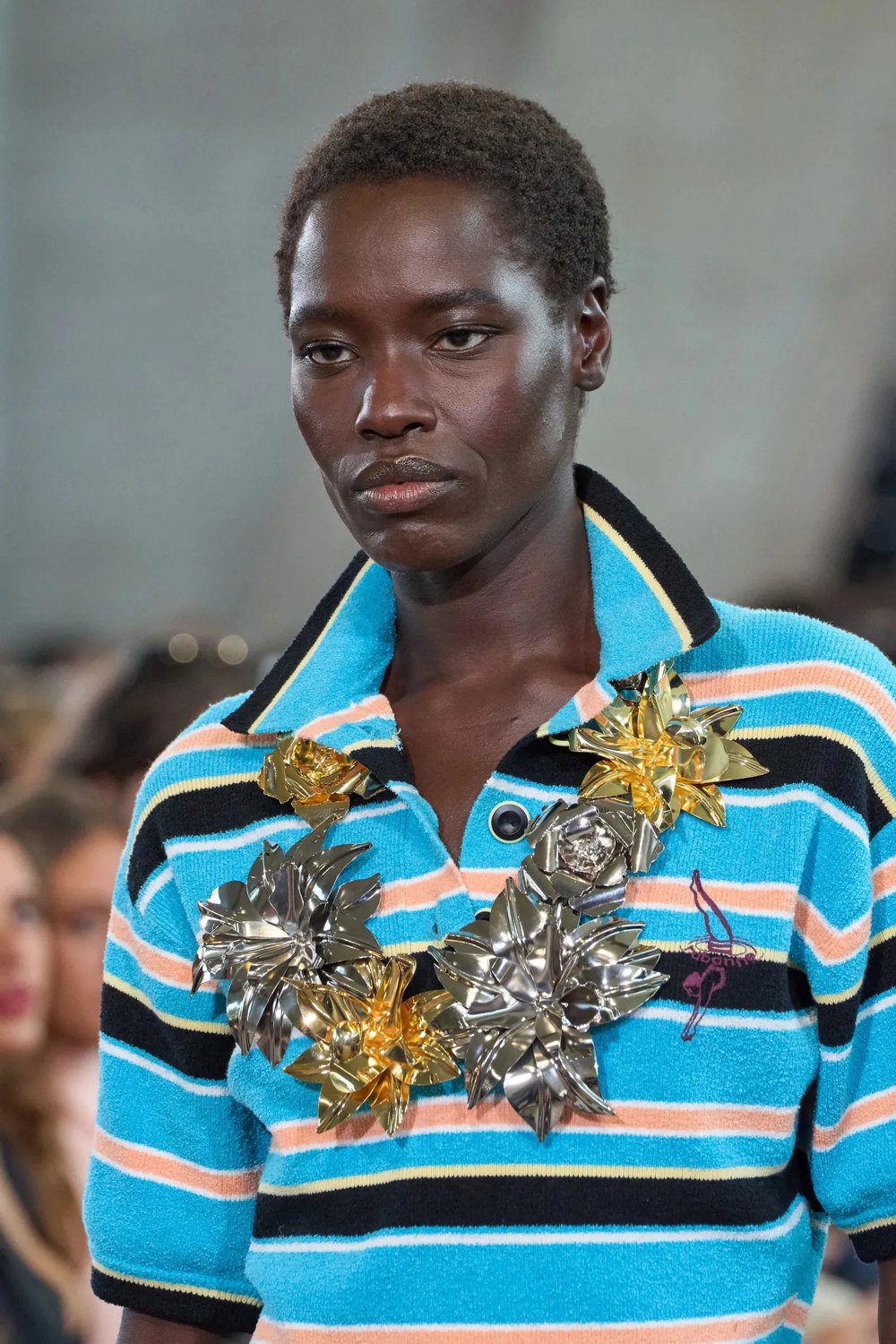
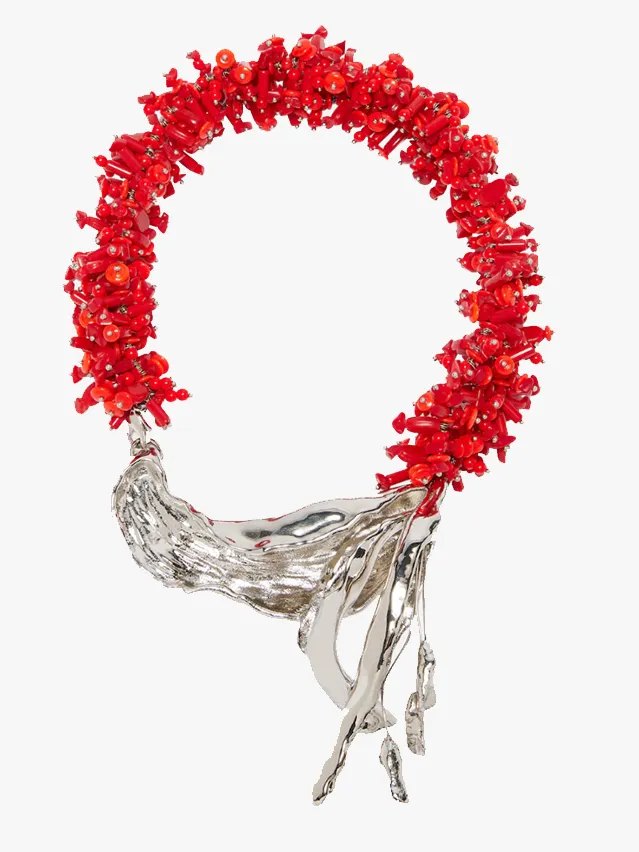
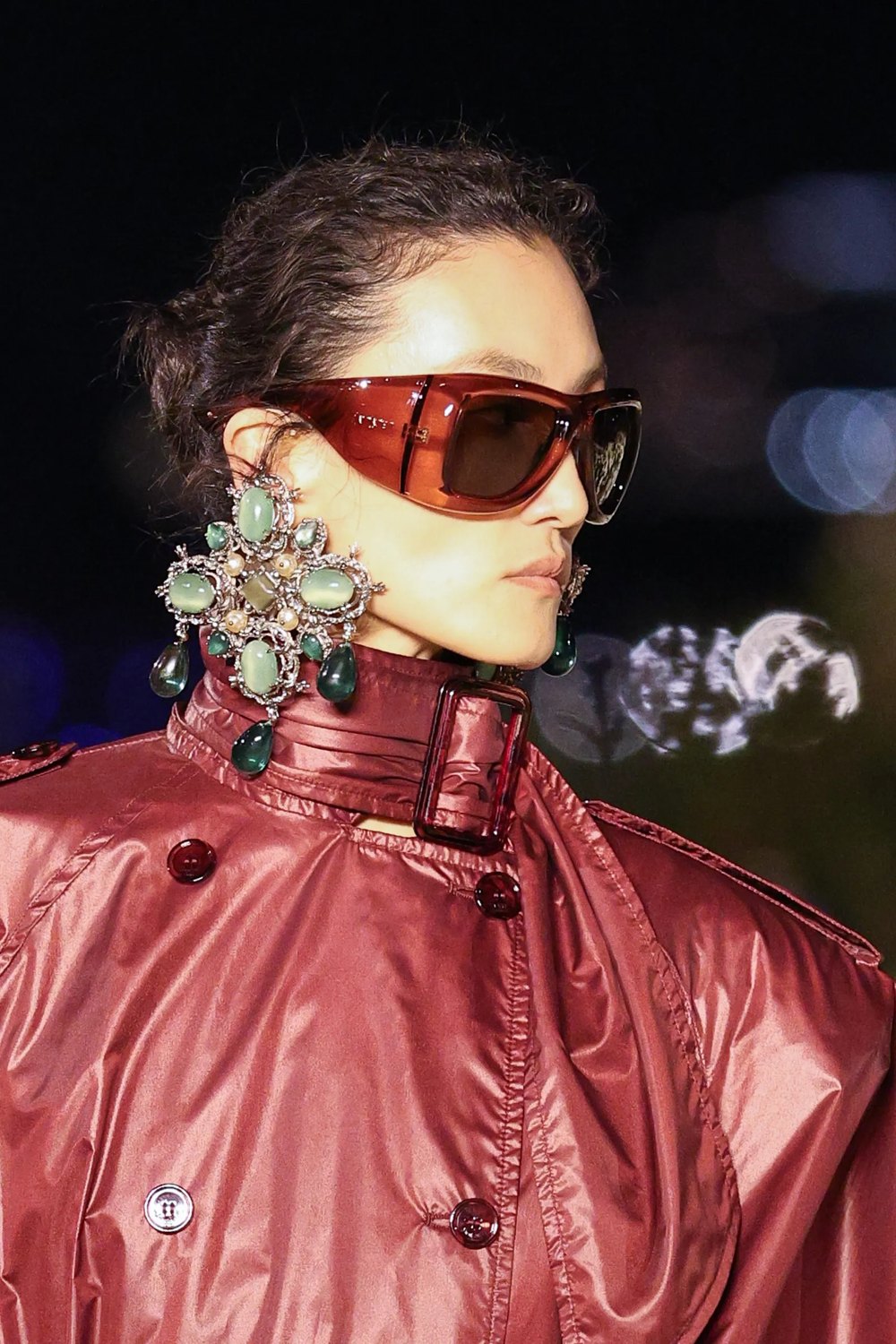
Mechanically, scale needs room. A wide cuff wants a pushed-up or short sleeve, not a fight with a shirt button. Big earrings want a simple neckline and hair out of the way. A heavy collar necklace wants a wide or open neck; on a high crew neck it just sits on top of the fabric and looks like it landed there by mistake.
One large piece, one clear stretch of skin for it to live on. That is the entire engineering problem.
Five. Humour beats carats
Gstaad, 1970. Burton bet her that if she could take ten points off him at ping-pong he would buy her a perfect diamond. She took the ten points. He went into town, found the smallest diamonds he could, and came back with three tiny rings — catalogued by Christie's forty years later at an estimate of five to seven thousand dollars, in a collection that made a hundred and thirty-seven million.
She wore them on her little finger for the next forty years, on the same hand as the thirty-three carats, and loved them just as loudly.
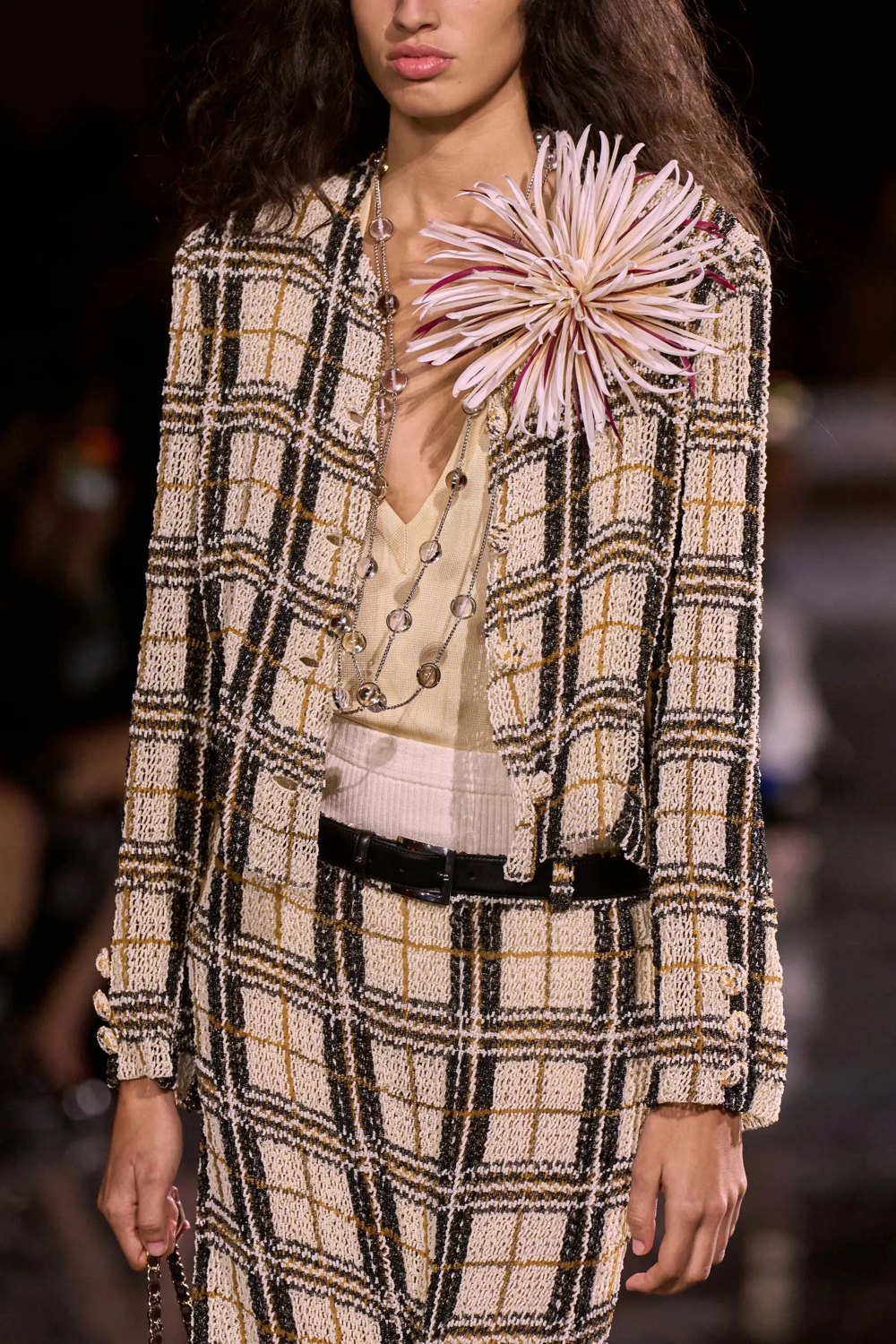
Which is the permission slip. The plastic ring from a holiday, the enamel brooch shaped like a lobster, the charm that means nothing to anybody else: wear it with the serious things, not instead of them. A joke you can wear is the one thing that never goes out of style — and the fastest way to stop an expensive outfit from looking like an inventory.

The part where it either suits you or it doesn't
All five rules are hers. Whether the pieces are yours is a separate question.
The world filed Taylor under femme fatale — one step too far around the wheel: hotter, harder and more dangerous than her face actually was. She read as the Seductress: warmth at its maximum, hardness only around forty per cent, charm with something withheld behind it. The internet calls that dark feminine now, as though it were a mood you could download. It is not a mood. It is a shape.
Her line is the S-line — winding, feline, the tension of a drawn bow. It takes nothing shapeless and soft, and nothing sharp and angular; it lives in the curve between the two. Which is precisely why big rounded stones and heavy curved settings sat on her as though they had been drawn for the face. In a sense they had. She worked it out empirically, by wearing everything for fifty years and keeping whatever held.
On another face the same pieces behave differently. Built from angles, that heavy curved cuff goes soft and shapeless. On a delicate cool-toned face, the great warm cabochon takes the room and leaves its owner somewhere behind it. The Queen wants clean architecture and one hard line. The Nymph disappears under anything with weight.
So before you buy the chunky gold the feed is selling this month — check which jewellery is actually yours. Three layers decide it: the line of your face, your colouring, and the archetype your face transmits before you have said a word.
Taylor spent fifty years and a small national treasury working hers out.
It takes you three photographs.
Elizabeth Taylor: MGM publicity still, public domain, via Wikimedia Commons. Present-day jewellery: Vogue and Harper's Bazaar, spring/summer 2026.