
Whimsigoth Is Five Things. One of Them Isn’t Clothes.
Velvet, lace, jewel tones and far too much silver — plus a room. What the whimsigoth aesthetic actually consists of, the colour rule every guide leaves out, and the theatre trick that stops it reading as a costume.
The word was coined by a man describing the inside of a Cheesecake Factory.
Evan Collins is an architectural designer and a co-founder of the Consumer Aesthetics Research Institute, a group that catalogues the visual styles the rest of us only half-remember. His name for this one began longer — whimsical mystical gothic celestial — and it had nothing to do with clothes. He meant rooms. Late-eighties and early-nineties interiors: spindly wrought iron, glass baubles, gilded light fittings, candles, far too much drapery. A chain restaurant happened to do it better than anyone.
Then TikTok took the word, shortened it, and pointed it at a wardrobe. Which is where the trouble starts. Everyone uses it now, every October, and almost nobody says what is actually in it.
So here is the list — it is five things, and you can count them. And then the part that matters in October: how to wear it without ending up in a costume.
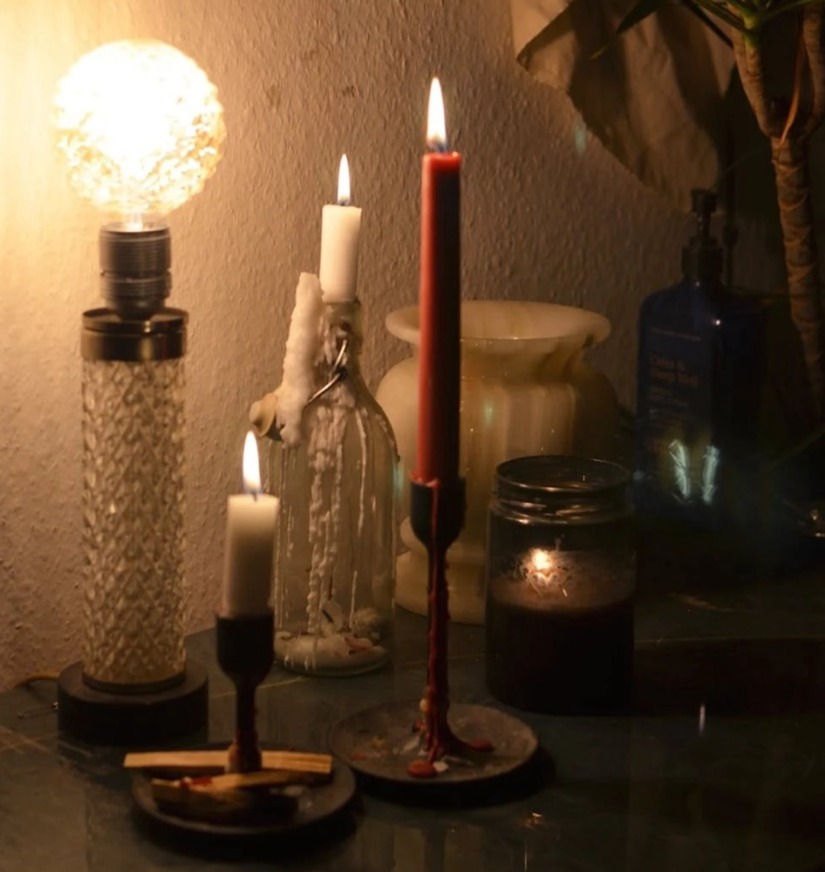

It was a room before it was a dress
Start at the end of the list, because it explains everything above it: the fifth thing is a room. Wrought iron, candles, stained glass, a Persian rug, an apothecary cabinet, a crystal ball.
Collins and his institute read that late-eighties turn to gloom as a response to collective trauma — in his telling, the AIDS crisis moving through the design world, coming back out as candles, heavy drapery and dark rooms. That is his reading, not settled history, and it is worth knowing before you hang the next string of fairy lights.
The practical consequence is immediate. Four of the five things are worn. The fifth is a room, and in every photograph you have ever saved, the room is doing half the work. A woman in a good coat in a bare white hallway is a woman in a coat. The same coat, one candle, dark wood, and she is something else entirely.
Which is very good news, because a room is cheaper than a wardrobe.


One. Fabrics you can see through
Velvet, lace, chiffon, mesh.
The rule underneath them is a single move: something you can see through, layered over something you can't. A mesh sleeve under a slip. Lace over a solid black shell. Chiffon over an opaque skirt.
That is the difference between this and every other dark aesthetic. Trad goth is sharp, flat and post-punk. This one is soft, layered and slightly out of focus — you are meant to have to look twice to see where one layer ends.
One sheer piece is enough. Two is a look. Three is a costume shop.
Two. The colours work in pairs
Not flat black. Jewel: plum, emerald, burgundy, sapphire, amethyst, moss.
And here is the part every guide leaves out — they work in pairs. Green and purple. Brown and green. Violet and plum. Dark red against pale green. Two of them, not five. Five is a fancy-dress box; two dark tones held against each other is what makes the whole thing look expensive and intentional.
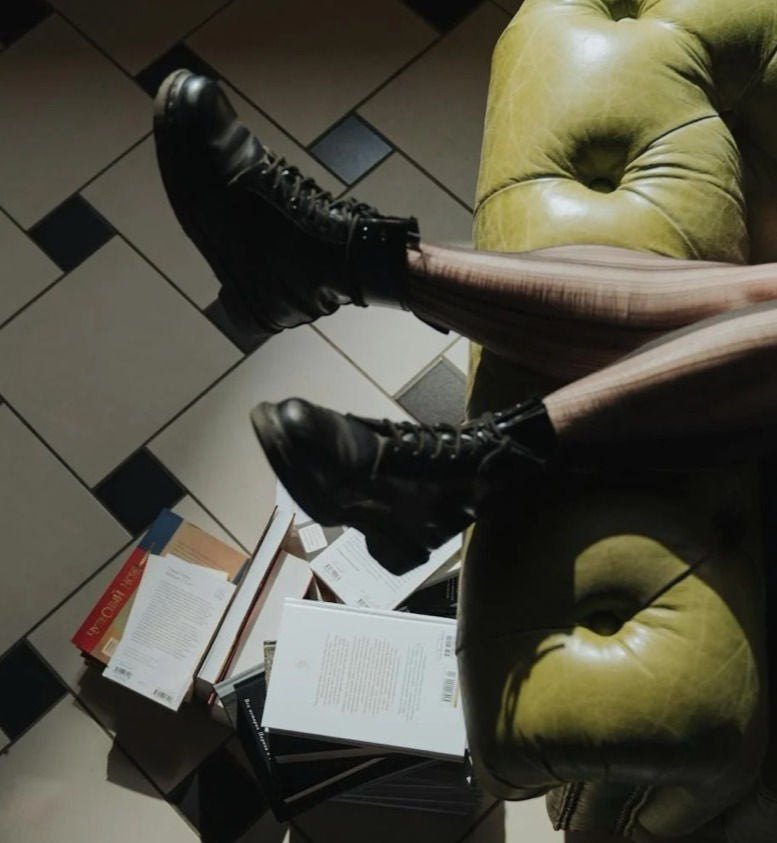
Black is allowed, but as the third thing, not the first: boots, tights, a shell under the lace. When black leads, you drift towards goth. When plum leads and black supports, you land where you meant to.
Three. Long, layered, never tight
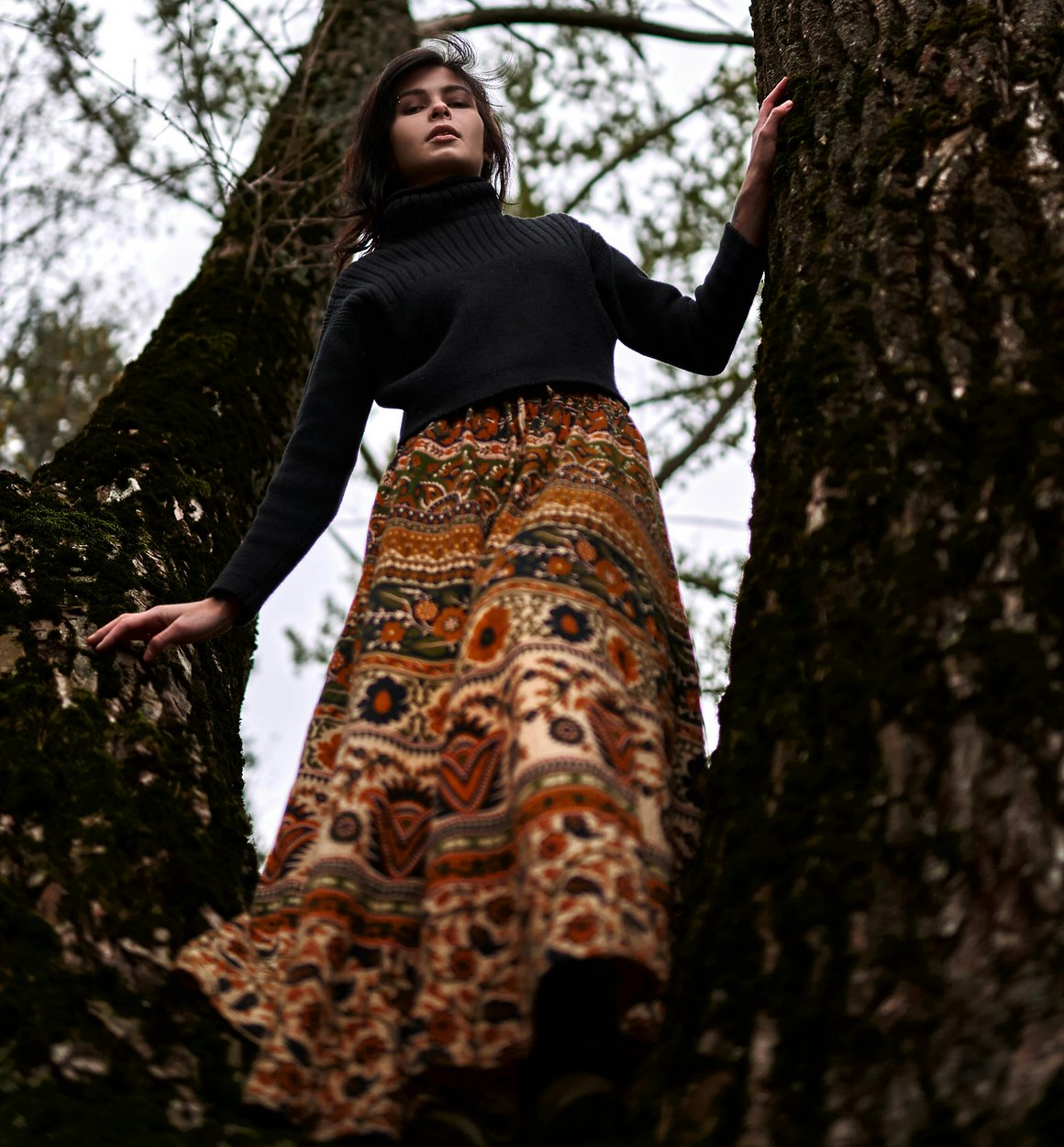
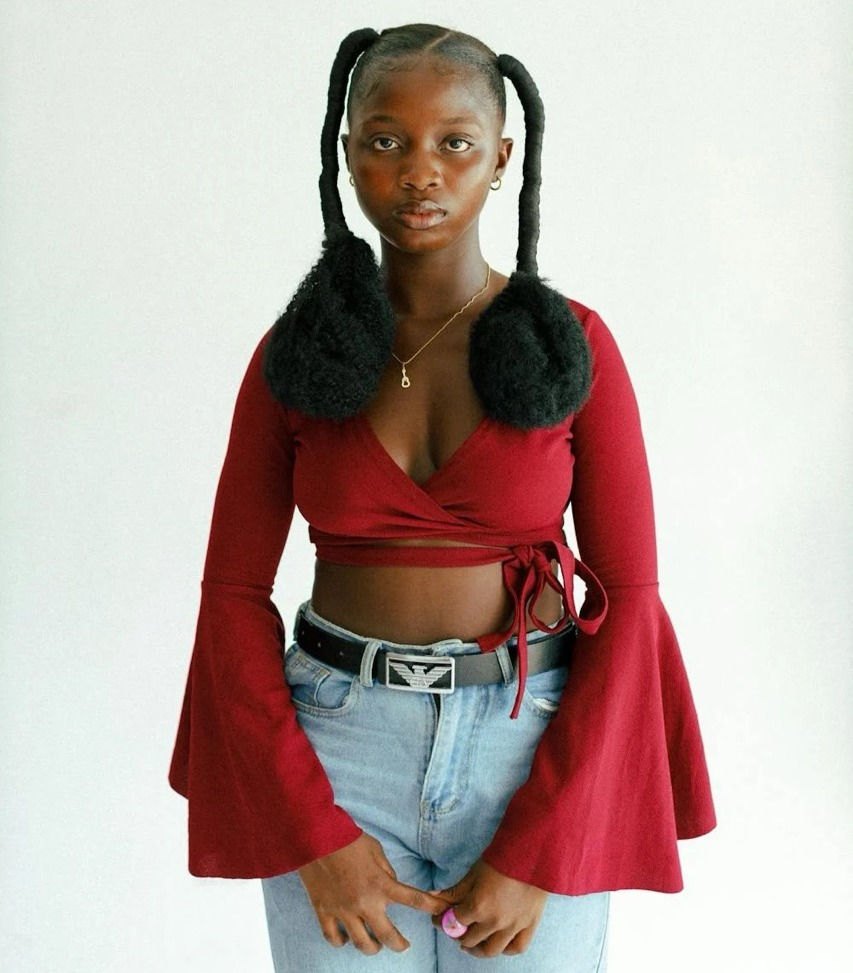
Maxi skirts. Bell sleeves. Slip dresses. Long cardigans and coats that swing.
Everything in this aesthetic is cut to move, and none of it is cut to grip. If it clings at the waist, it belongs to a different decade — the nineties took the body out of the silhouette and let the fabric do the shape.
The most wearable version on an ordinary Tuesday is two pieces: a plain black long-sleeved top, and a printed or patterned maxi skirt under it. That is the entire look. Boots, and nothing else has to happen.

Four. Far too much jewellery, on purpose
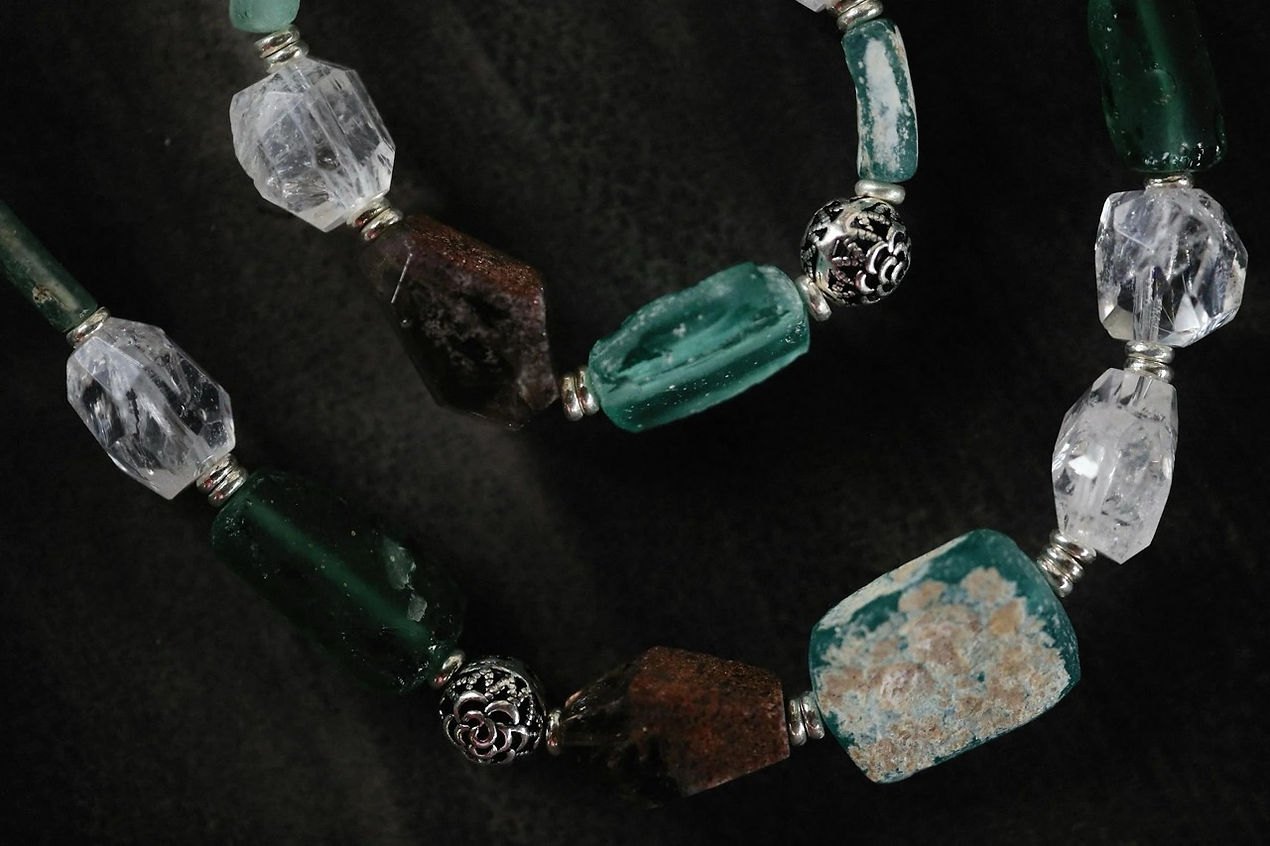
Blackened silver. Crystals. Moons, stars and tarot cards on chains. Rings on most fingers.
Restraint is the wrong instinct here. The point is accumulation — jewellery that looks collected over fifteen years, not bought in one order last Thursday. So: mixed lengths, mixed weights, nothing matching, and at least one piece with an obvious stone in it.
If you own one good heavy chain and five thin ones, wear all six. That is the aesthetic. Silver, not gold — gold sends the whole thing towards seventies boho, which is a neighbour, not the same house.

Five. And a theatre trick, because new cloth reads as costume
This is the one that decides it.
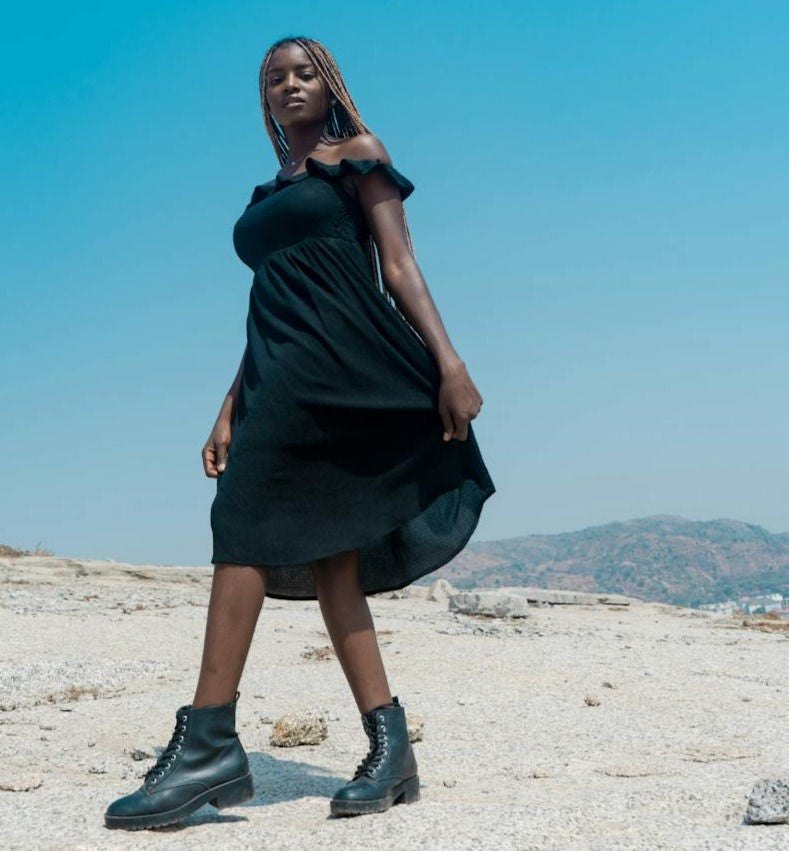
If the fabric looks new, you look like you are in a costume. If it looks worn, you look like a witch. Shine is the tell: flat-black polyester, crisp lace, a velvet with a factory sheen — all of it announces that it arrived this week.
There is a theatre trick for this and it costs nothing. Soak the thing in strong tea. An hour in a bath of it takes the flatness out of a black, dulls a colour down and leaves everything faintly sepia, as if it has been in a cupboard for forty years. Rub the hem between your hands. If you are brave, take it outside and walk it through wet grass.
Test it on something you don't love first — tea is not reversible, and it goes further on cotton and linen than on synthetics.
The blueprint is fifty years older than the word
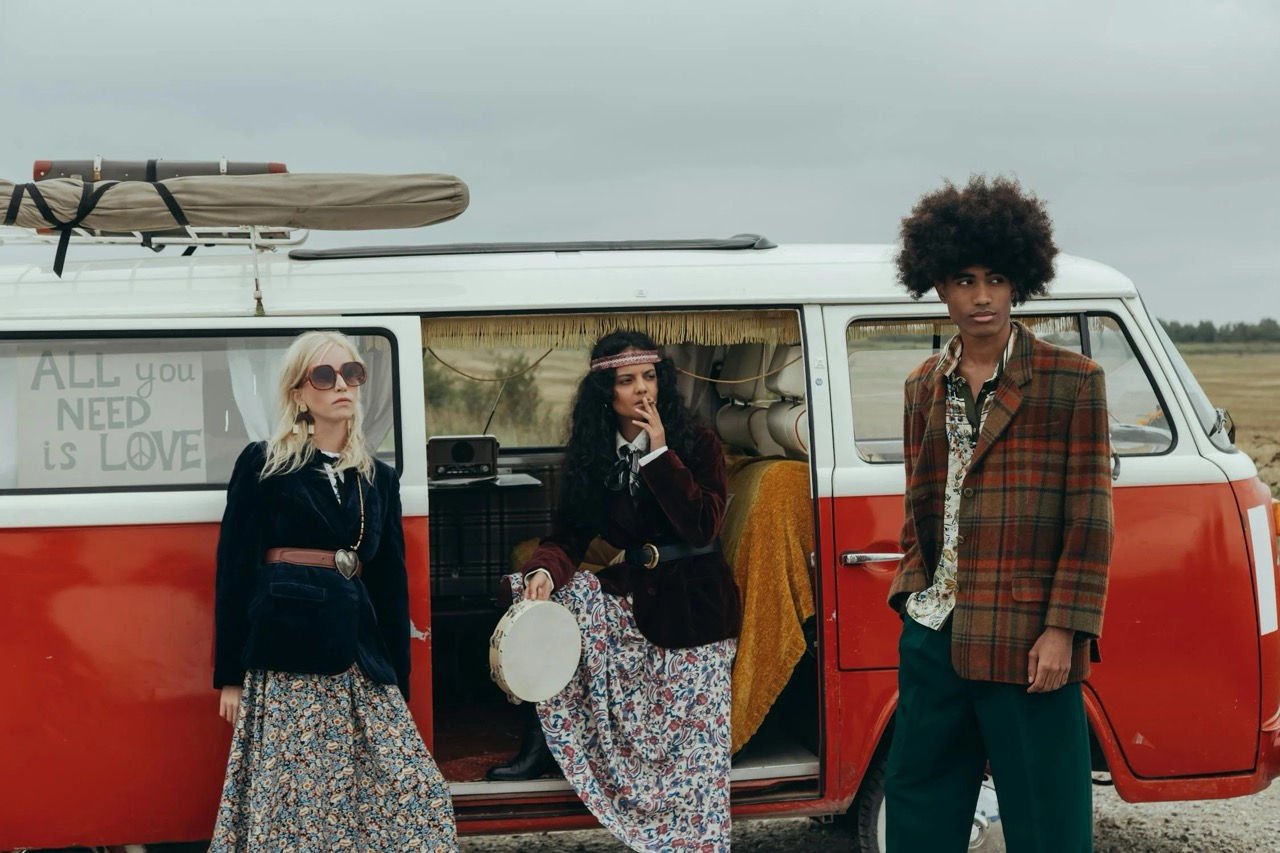
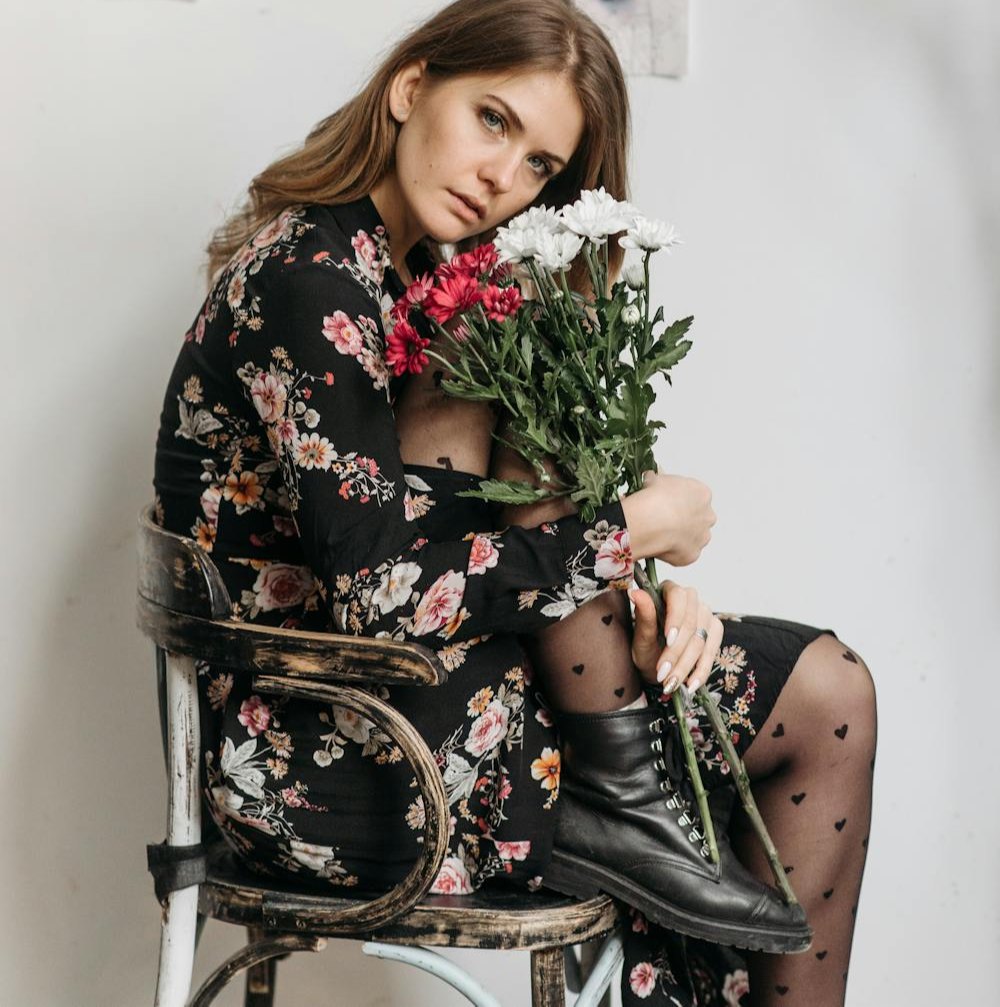
Stevie Nicks. Bell sleeves, layered skirts, lace shawls, a hat, far too much jewellery, and a song about a witch called Rhiannon that she released in 1975. Every mood board ever made for this has her on it first, and she predates the term by about half a century.
After her, the reference shelf is simply the nineties being obsessed with witches. The Craft. Charmed. Sabrina. Buffy. Most of what Tim Burton made. The Anna Sui collections of those years. And Practical Magic — the one everybody reaches for first, which is why there is a sequel in cinemas right now and a magazine shoot to go with it.
And if you want the sound of it rather than the look: Mazzy Star, the Cranberries, the Smashing Pumpkins album covers, and How Soon Is Now? — the song from The Craft that half of you have just heard in your head.
That is the whole thing. It's the nineties, doing the seventies, dressed as the sixteen nineties.
Now the harder question: how much of it is yours
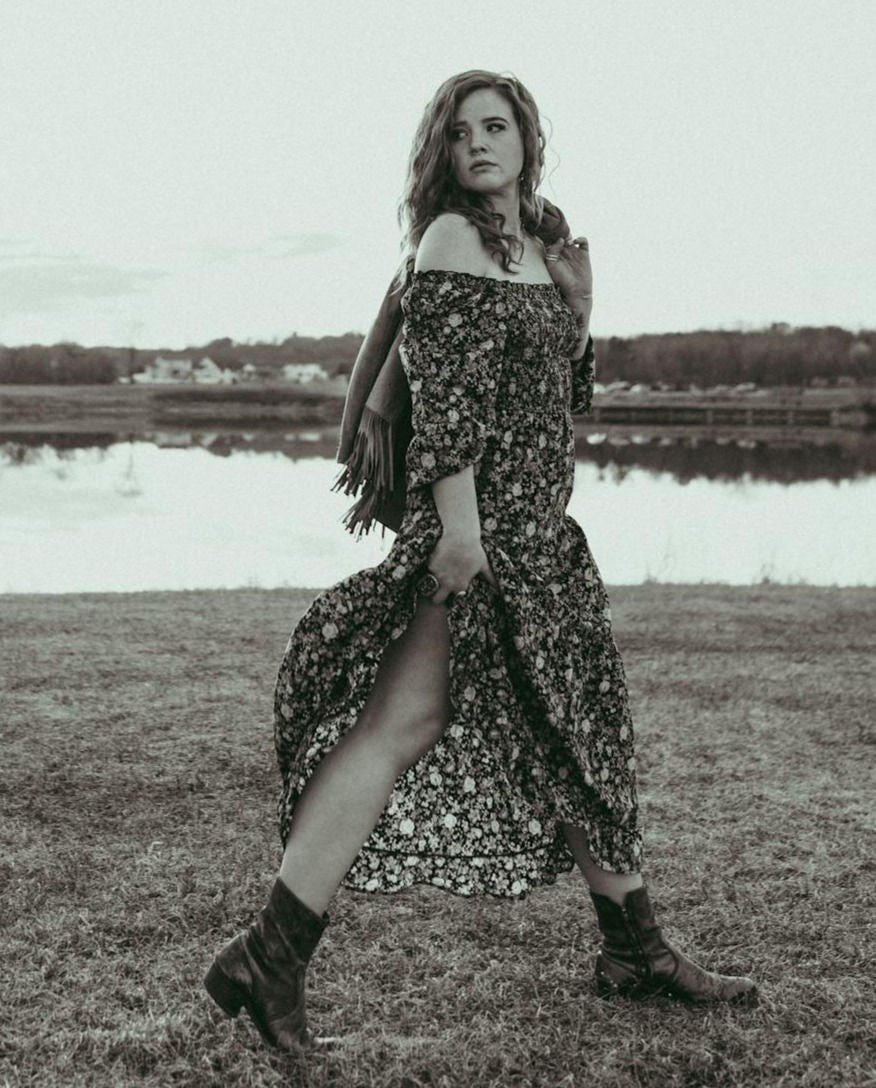
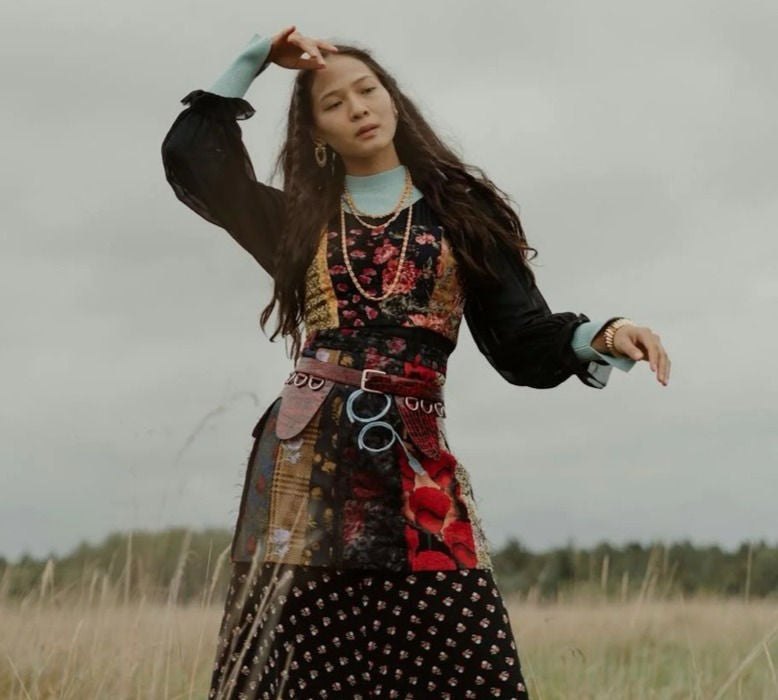
Here is what the lists never say. An aesthetic is a set of materials, not a verdict. Velvet, lace, jewel tones and a pound of silver do very different things on different faces, and the difference is not taste — it is structure.
At Selphico we read appearance in three layers. The face line — its shape and weight. A soft or fluid line disappears under heavy blackened silver and takes chiffon beautifully; a firm or angular line carries the weight of the metal and drowns in the lace. Colouring — depth, contrast, temperature. Those jewel pairs are the most demanding part of this whole aesthetic: plum on one woman is dramatic, on another it is simply bruising, and it is her depth and contrast that decide which. The archetype — the character your face broadcasts before you have said anything. The Lava-Alchemist wears the mystical register as her native tongue. On the Cloud-Dreamer the same outfit reads as fancy dress, and the trick for her is to take exactly one element — the sleeve, the stones, the plum — and leave the rest.
Most people sell you one layer of the three. A colour analyst gives you the palette, a stylist gives you the silhouette. We read all three, from three photographs.
October gives everybody permission to dress like this for a month. Worth knowing which parts of it you can keep in November.