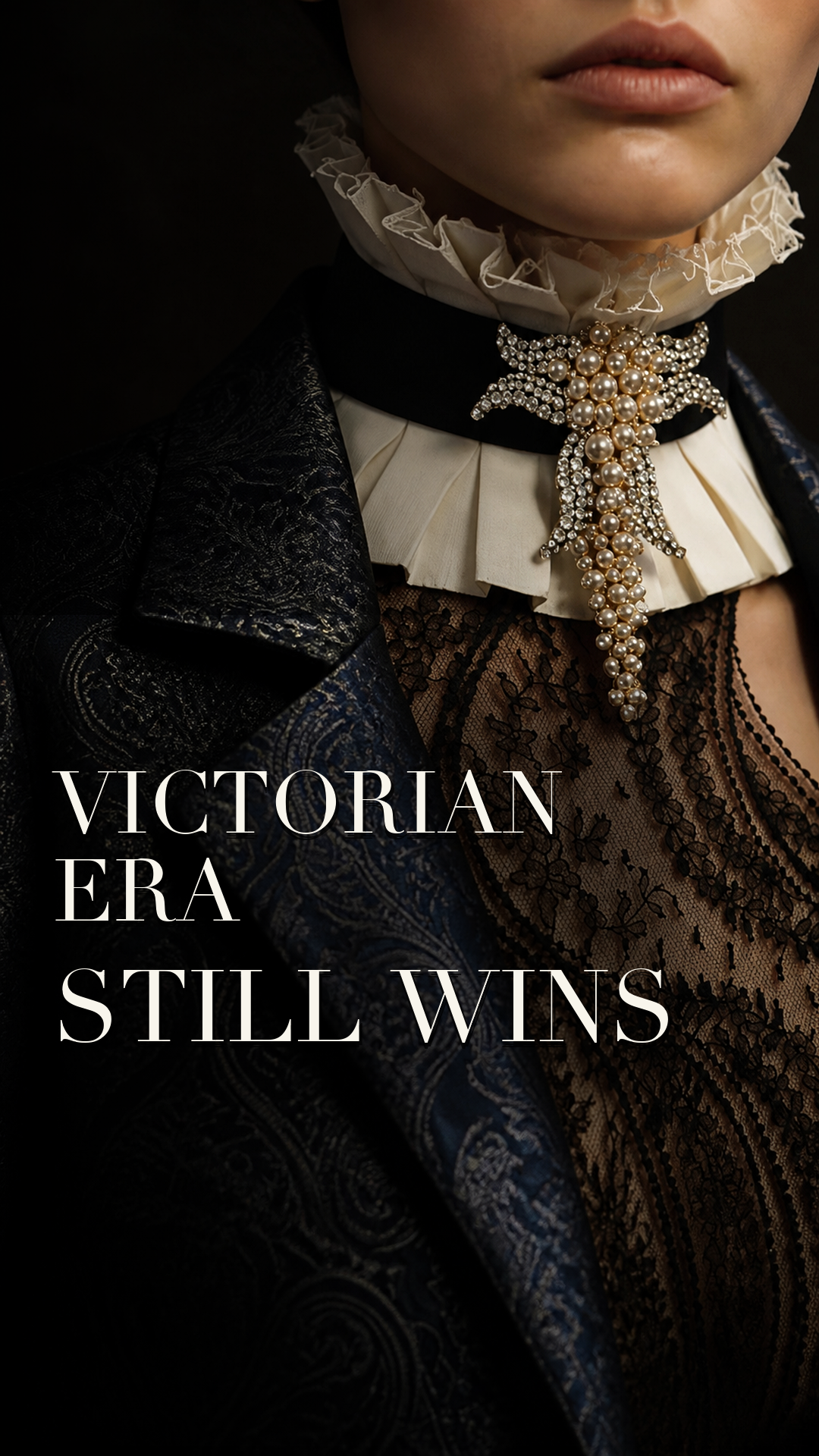
Why Victorian Fashion Never Really Left Your Closet
The corset, the high collar, the mourning lace — Victorian fashion didn't disappear, it just changed fabric. Here's how those 19th-century rules still run your closet.
The Corset Never Actually Disappeared
I watched one of those Victorian costume documentaries at 1am — the kind where a historian pulls out a whalebone corset and explains how a woman's ribs were, essentially, negotiable. And I kept waiting to feel horrified. Instead I felt recognized. Because I own a blazer with internal boning at the waist. I own a bodysuit that does the exact same job as that corset, just with elastane instead of whale. We didn't abolish the Victorian silhouette. We just made it stretchy and called it "tailoring."
That's the thing nobody tells you about 19th-century fashion — it wasn't really about restriction. It was about architecture. A defined waist, structured shoulders, a spine held upright by fabric — the whole point was to build a body that looked composed even when the woman inside it wasn't. And that logic didn't die with Queen Victoria. It just moved into blazers, wrap dresses, anything with a nipped waist and a stiff shoulder seam.
The High Collar Is Just a Turtleneck With Better PR
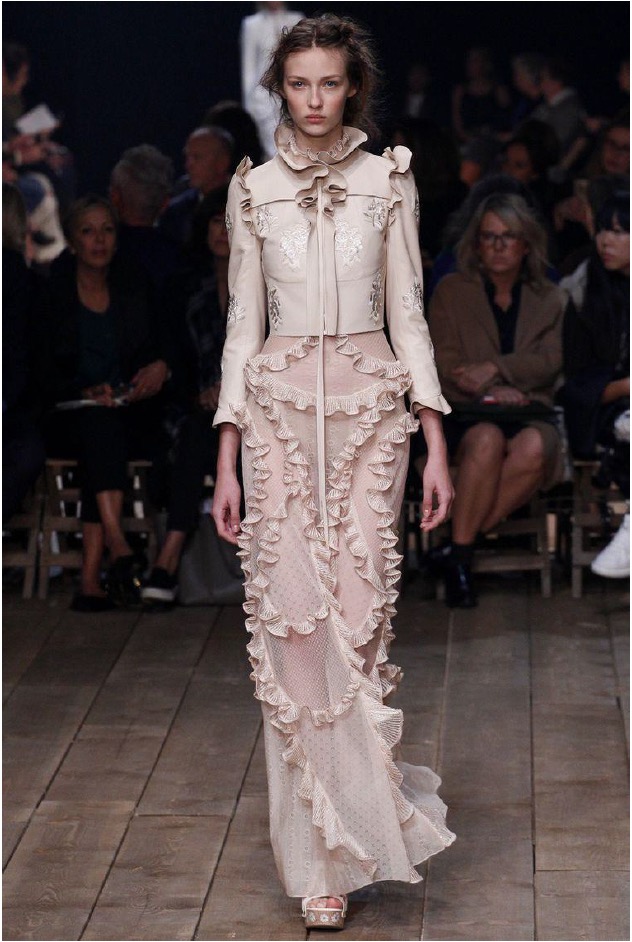
High collars, buttoned to the chin, functioning like a corset for the neck — that's pure Victorian etiquette, the idea that a woman's throat was somehow scandalous unless fully covered. And yet here we are in 2024, buying turtlenecks and mock-neck sweaters and calling them "elevated basics," not realizing we're recreating the exact same gesture: cover the throat, lengthen the neck, add gravity to the face. The collar changed fabric. The intention — dignity through concealment — never left.
Same with lace. Victorian lace was mourning wear, modesty wear, church wear. Modern lace shows up on slip dresses, on collars of blouses that look demure until you notice the sheer sleeves. We took the most repressive fabric of the 1800s and turned it into something borderline seductive. That reversal is honestly the most interesting part — the same material, opposite message.
Who Actually Carries This Off
Not every face can wear structure like this without looking costumed. Queen types — think Cate Blanchett's bone structure, that cool, architectural composure — were basically built for the Victorian silhouette. A stiff collar, a cinched waist, a dark wool coat with a defined shoulder: on a face this sculpted, it reads as authority, not cosplay. The hardness of the bones matches the hardness of the tailoring. Nothing fights.
Femme Fatale types get a different version of the same era — the corset-as-power-move rather than corset-as-modesty. Monica Bellucci's warmth plus that same sculpted jaw can carry a boned bodice or a deep-V structured dress and make it look like seduction with excellent posture, not a costume drama extra. The heat in the face changes what the exact same silhouette communicates.
So maybe the real Victorian legacy isn't the whalebone or the mourning black. It's this idea we quietly inherited — that structure equals dignity, that a defined waist and covered throat still read as "put together" a century and a half later. Do you gravitate toward that kind of built-in structure, or do you feel more like yourself in something that doesn't hold a shape at all?